Your High Street Is a Free Research Lab: The 20-Minute Weekly Walk
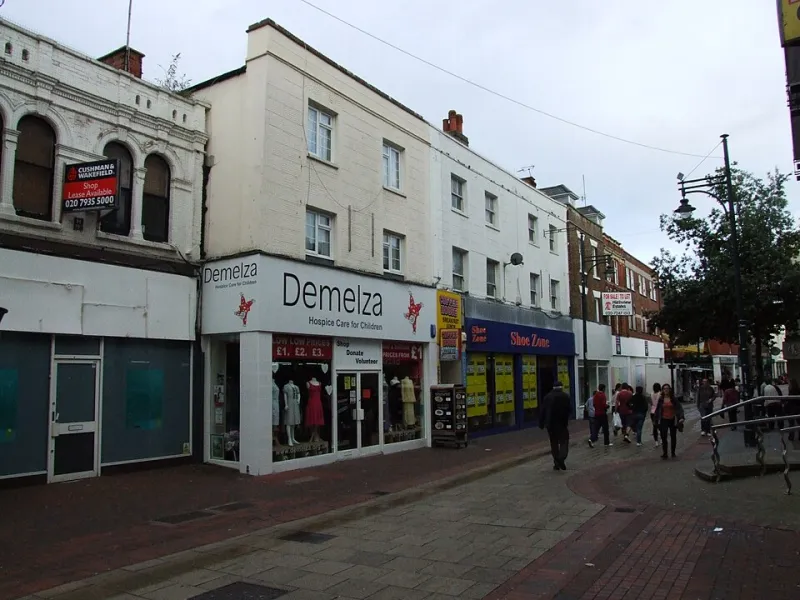
Photo: Chris Whippet , CC BY-SA 2.0, via Wikimedia Commons
Most market research sounds expensive. For regional SME owners, one of the cheapest research tools is already outside the door. It is not a grand insight or a consultant's report. It is a habit: the 20-minute town walk. Same loop, same time, once a week. In 2026, with high streets still shifting under everyone's feet, that small ritual can tell you more about local demand than another online survey.
This is not about becoming a retail analyst. It is about noticing what changes, who turns up and where the gaps are. The walk costs you 20 minutes and, if you are honest, a coffee. Over a year, that is roughly 50 short field trips. The aim is not to spy on competitors. It is to build a light, repeatable picture of your patch.
Why a pavement lap beats another survey
Surveys ask people to remember what they did. A walk shows you what they are doing. You see queues outside the pharmacy, prams avoiding a narrow stretch of pavement, delivery vans blocking a loading bay, new signs in an empty unit. You notice which bus stop is busy at 10am and which café fills up at 3pm. For a service business, those details are a proxy for local confidence. If footfall starts to shift, your enquiries may follow a fortnight later. If a competitor changes opening hours, you want to know before a customer mentions it.
The trick is to look for patterns, not one-off curiosities. One quiet Tuesday means little. Three quiet Tuesdays in a row, with a new out-of-town retail park opening, is a pattern worth testing.
The route: same loop, same time, four questions
Pick a 20-minute loop from your office, shop or nearest high street. Keep the day and time consistent so you are comparing like with like. Walk it once a week and ask the same four questions:
- Who is here that I do not usually serve? Think about age, accessibility needs, parents, tradespeople, shift workers, students or older shoppers.
- What has changed since last week? Look at window displays, queues, signs, roadworks, opening hours and staffing levels.
- Where are people pausing or walking past? A pause point is a clue. A bench, noticeboard, bus stop or café queue can tell you where attention sits.
- What is missing that my business could reasonably solve? Keep this grounded. You are looking for a small gap, not a fantasy expansion.
Take notes on your phone or in a small notebook. Do not photograph people. Observe public fronts and public behaviour. You are the owner on a walk, not an inspector on a stakeout.
A simple observation template
Use the same headings each week. A single page is enough.
| Field | What to note | Example |
|---|---|---|
| Date, time, weather | Keep it consistent | Tuesday 10.15am, dry |
| Footfall feel | Quiet, steady or busy, and where people cluster | Bus stop and pharmacy queue |
| Changes | New signs, shutters, hours or offers | Bakery now opens at 8am |
| Who is missing | Groups you do not see | No outside seating for older shoppers |
| Pause points | Where people stop | Noticeboard by the library |
| Competitor moves | Queues, offers, staff, displays | New lunch deal at the deli |
| One phrase | A sentence you overheard or a thought worth keeping | People wait for the bus with nowhere to sit |
| Potential gap | One idea, not a plan | A small click-and-collect window for local workers |
The last two rows matter most. A walk without a note is just a wander. A walk with one clear observation becomes research.
Two regional examples
In Sheffield, a Welbni member who runs a small print and signage studio started walking the same Tuesday loop. For three weeks she noticed tradespeople parking awkwardly near the paint merchant and queuing at a sandwich shop with no covered seating. She did not open a café. She tested a 48-hour van signage service aimed at tradespeople, promoted through a counter card at the paint merchant. It produced two enquiries in the first week and one paid job. Small, cheap and based on a pattern she could see with her own eyes.
In Norwich, a member with a home-organising business noticed parents and older shoppers avoiding a narrow stretch near a new independent children's shop. She also saw school-uniform bags piling up by the till. Instead of launching a big campaign, she offered a free 15-minute storage check to parents who bought uniform items, with a simple flyer in the shop bag. It led to three conversations and one booking. The point was not the flyer. The point was that the high street showed her a customer group she had been overlooking.
Turn your notes into one experiment within a week
A notebook full of observations is not growth. Pick one pattern and turn it into a small test before the next walk.
On Friday, read your notes and choose one recurring theme. Write a hypothesis in a single sentence: if we try a small change for a specific group, then we will see a specific measure within a set time. Pick the smallest test you can run for under £50 or two hours of work. Set a success measure such as three conversations, five enquiries or one booking. Run it by the following Thursday. Then review it on your next walk.
For example: if we put a click-and-collect card in the window for local workers, then we will get three enquiries within seven days. That is testable. It does not require a new website. It does require you to look, choose and act.
The 20-minute walk will not replace proper market research. But it will keep you close to the street your business actually serves. And in a regional economy, close is often more useful than clever.