Before the Deposit Goes Down: A 2026 Access Walkthrough for SME Venues
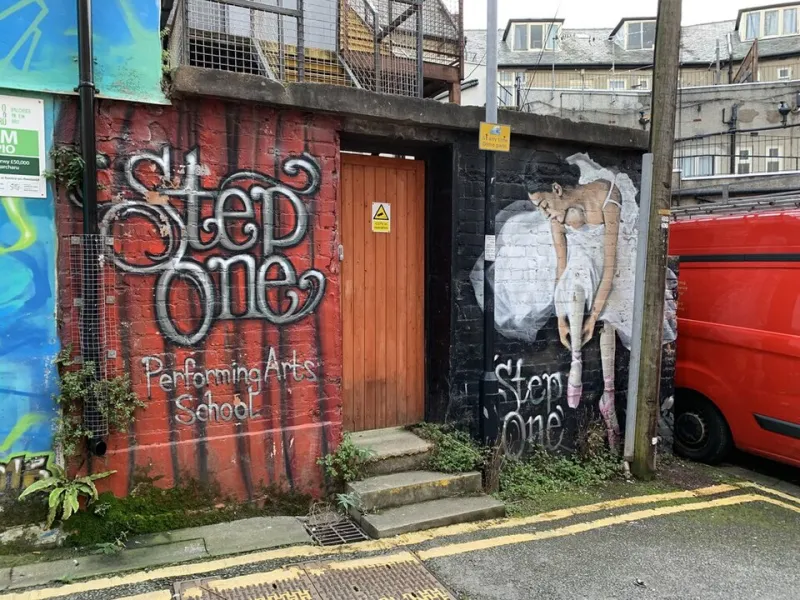
Photo: Richard Hoare , CC BY-SA 2.0, via Wikimedia Commons
Booking a room for a Welbni meet-up is usually a practical job: capacity, price, parking, maybe a projector. Access often gets tacked on at the end as a yes-or-no question. Can everyone get in? It sounds simple. In practice, the answer depends on routes, doors, lifts, loos, lighting, noise and a dozen small details that never make it into the sales email.
The good news is that most of this can be checked in about ten minutes, and many fixes cost nothing more than a phone call. This is not a legal compliance audit. It is a practical room test for organisers who want first-timers to make an informed decision before they book a ticket.
Start with the route, not the room
The function room might be lovely. The journey to it might be the problem. Before you get distracted by exposed brick and sensible chairs, walk the route a member would take from the nearest public transport stop, car park or street entrance.
Look for level access, dropped kerbs, wide pavements, clear signage and a main entrance that does not rely on someone holding a heavy fire door open. If the accessible entrance is round the back, past the bins and through a service corridor, that is worth knowing — and worth saying in the listing.
The ten-minute walkthrough
Run this checklist on the day you view the venue, or ask a trusted member to do it if you cannot get there. A phone call can cover some of it, but nothing beats walking the room.
- Approach and entrance: Is there a step-free route from the street or car park to reception? Are doors wide enough for a wheelchair or mobility scooter, and can they be opened easily?
- Inside routes: Are corridors clear, or used for storage? Is the lift working, big enough, and clearly signposted? If the lift is out of order, what is the backup plan?
- Accessible toilets: Are they open, clean and on the same level as the meeting room? Is there a RADAR key requirement? Is the accessible loo also being used as a storage cupboard? It happens.
- Hearing and sound: Does the room have a hearing loop, and is it switched on and tested? Hard surfaces and high ceilings can make conversation echo. Ask whether microphones are available for larger groups.
- Lighting: Can the lights be dimmed or adjusted? Are there glare-heavy windows behind the speaker? Fluorescent flicker and harsh downlights can be exhausting for some members.
- Seating and sightlines: Can chairs be rearranged? Is there space for a wheelchair at a table rather than at the edge of the room? Can people see the screen and the speaker without twisting?
- Quiet space: Is there a side room, alcove or nearby corridor where someone can take a break from noise? A busy networking room can be a lot for members with sensory sensitivities or anxiety.
- Signage and wayfinding: Will attendees know where to go without asking? Are signs clear, well lit and placed at a readable height?
- Refreshments and service points: Is the tea table reachable? Are cups, water and biscuits at a height someone seated can use? If food is served, are ingredients labelled?
- Emergency and staff confidence: Can everyone leave quickly if needed? Are venue staff briefed on accessible exits and any evacuation arrangements for people with mobility needs?
Questions to ask before you pay
A good venue will not mind these questions. A venue that gets defensive or vague is giving you useful information too.
Ask: “Is the full route from the main entrance to the meeting room step-free?” Ask: “Can you send a photo of the accessible entrance and the accessible toilet?” Ask: “Is the hearing loop tested regularly, and who checks it?” Ask: “If the lift fails on the day, what happens?” Ask: “Can we rearrange the furniture to leave space for wheelchairs and a quiet corner?”
If the answer is “I think so”, treat it as a no until someone confirms. Do not rely on the booking system’s accessibility tick box. It is often optimistic.
Say what is true in the event listing
Honesty is more useful than a polished claim. If the room is step-free but the accessible loo is on another floor, say so. If there is no hearing loop, say that too. If the venue is quiet until 6pm and then gets loud, mention it.
A short access note can save a lot of emails. For example: “Step-free entrance from the car park. Accessible toilet on the same floor. No hearing loop. The room has hard floors, so it can be echoey when full. There is a quiet side room available.” That tells a first-timer what they need to know without pretending the venue is something it is not.
Low-budget fixes that actually work
Not everything needs a facilities budget. A printed large-print sign at the entrance helps. A named contact who will meet someone at the door helps. Reserving a seat near the exit helps. Asking the venue to switch on the hearing loop — and testing it before people arrive — helps. So does briefing your own committee on where the quiet space is and who to ask for help.
If you are booking a village hall, a hotel function room or a co-working space for a 2026 meet-up, put access on the same list as price and parking. It is not an extra. It is part of whether the event works.
The simplest test is this: could a member with a wheelchair, a hearing aid, a guide dog or a quiet need arrive, settle in and take part without having to solve a puzzle? If not, make the phone call now — before the deposit goes down.