Stop Announcing, Start Informing: The 150-Word Member News Item Most SMEs Waste
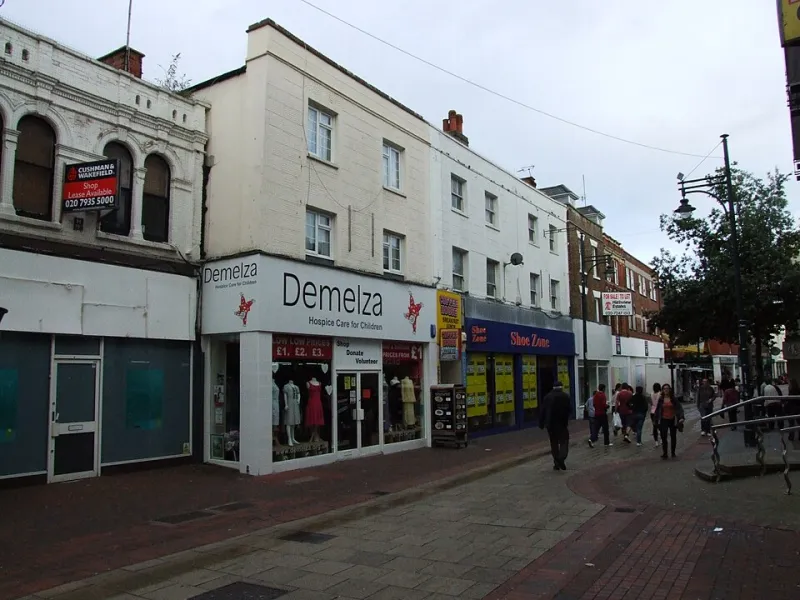
Photo: Francisclarke, CC BY-SA 4.0, via Wikimedia Commons
Every regional business network has a member news page. Ours does. And every week, a handful of submissions land in the editor's inbox that are genuinely useful: a shop has moved two doors down, a firm has hired its first apprentice, two local companies have decided to share a warehouse. The rest are 300-word press releases about being 'delighted to announce' something that could have been a sentence.
That's a waste. Member news is the cheapest PR a UK SME will ever get. It costs you nothing but 20 minutes and a few facts. But the format is tight — around 150 words — and that tightness is the point. It forces you to decide what actually matters.
Here's how to write one that an editor will publish without rewriting half of it.
Lead with the fact, not the feeling
The first sentence should answer the question a reader actually has: what changed? Not how you feel about it. Not how long you've dreamed of it. What is different in the world now that wasn't different last week?
Weak: 'We are absolutely thrilled to announce the next chapter in our journey.'
Better: 'Carter & Sons has moved from Mill Lane to a 1,200 sq ft unit on the A38 retail park, doubling its floor space and adding a second repair bay.'
The second version tells me who, what, where, and why it matters. It also gives the editor something to put in the headline. If your first sentence could be copied into any other business's news item, it's not a first sentence — it's a warm-up.
The three details editors always cut
Most submissions are too long because they include things no reader needs. Here are the three that get deleted first, every time.
-
The mission statement. 'Founded in 2014, we are a customer-centric organisation committed to excellence.' Nobody is reading member news to learn your values. They're reading to find out if you've hired someone they know, moved closer to their office, or started working with a firm they already trust.
-
Adjectives doing the work of facts. 'A fantastic new state-of-the-art facility' is not information. 'A 600 sq ft workshop with three new benches and a spray booth' is. If you can't measure it or point at it, cut it.
-
The quote that says nothing. 'We're excited about the future,' said the managing director. That's fine in a full press release where the quote is expected. In 150 words, it's dead weight. If you have a quote that includes a specific detail — a date, a name, a number — keep it. Otherwise, lose it.
Why 'delighted to announce' gets you binned
It's not because editors hate enthusiasm. It's because that phrase signals that the rest of the submission will be about you rather than the news. 'Delighted to announce' is the sound of a business talking to itself. It also delays the actual fact by half a sentence, which is half a sentence too long in a 150-word format.
Try swapping it for the thing you're announcing. 'Delighted to announce that we've hired a new operations manager' becomes 'Riverside Logistics has appointed Priya Shah as operations manager.' Same news, half the words, twice the clarity.
Template 1: The new hire
Use this when someone joins the team. Keep the bio to one specific detail — not a list of qualifications.
[Business name], based in [town], has appointed [name] as [job title]. [Name] joins from [previous company or situation] and will [one concrete responsibility]. [He/She/They] previously [one specific relevant achievement or experience]. [Owner name] said the appointment would [one practical outcome, e.g. 'allow the firm to take on two more contracts a month'].
That's about 70 words. You can add a line about where the business is and what it does if the editor doesn't already know. Don't add a paragraph about the company's history.
Template 2: The move or expansion
This is the most common member news item, and the easiest to get wrong. The facts are the story: old address, new address, size change, what's new, opening date.
[Business name] has moved from [old location] to [new location], increasing its [floor space / capacity / team size] from [old figure] to [new figure]. The new site includes [two specific features]. It opens on [date]. [Owner name] said the move was prompted by [one concrete reason, e.g. 'rising demand for same-day delivery in the north of the city'].
If you're expanding rather than moving, swap the first sentence for: '[Business name] has expanded its [facility / team / service] at [location], adding [specific thing] and creating [number] new jobs.'
Template 3: The local partnership
Partnerships are underreported because both firms assume the other one will write it up. Don't wait. One submission, two businesses named, everyone gets the coverage.
[Business A], based in [town], has partnered with [Business B] to [specific practical outcome]. The arrangement means [concrete change for customers or operations]. [Name] from [Business A] said the partnership would [specific benefit]. [Name] from [Business B] said it would [specific benefit from their side].
Keep both quotes short and specific. 'We're looking forward to working together' is not a quote. 'This lets us cut delivery times to the retail park from two days to same-day' is.
A quick checklist before you hit send
- Does the first sentence contain a fact that changed this month?
- Have you removed every adjective that isn't attached to a number?
- Is there a date? Editors need dates.
- Are all names spelled correctly, with job titles?
- Is it under 160 words? If not, cut the boilerplate first.
- Have you included a photo? A simple, well-lit shot of the new space or the new hire is worth more than another 50 words.
Member news isn't a press release. It's a noticeboard with a decent reach. Write it like you're telling a neighbouring business owner across a table, and you'll be surprised how often it gets picked up — and how often it gets read.